
VDS vs VPS: What Is the Difference and Which One Should You Pick?
VDS and VPS are not the same thing. Compare resource allocation, isolation, performance consistency and pricing to pick the right virtual server.
VDS vs VPS: What Is the Difference?
The terms VDS and VPS get used interchangeably all the time, but they describe two different things technically. Picking the right virtual server has a direct effect on how fast and how reliably your project runs. This article breaks down what separates the two, what each is good at, and how to decide between them.
The Basic Definitions
VPS (Virtual Private Server)
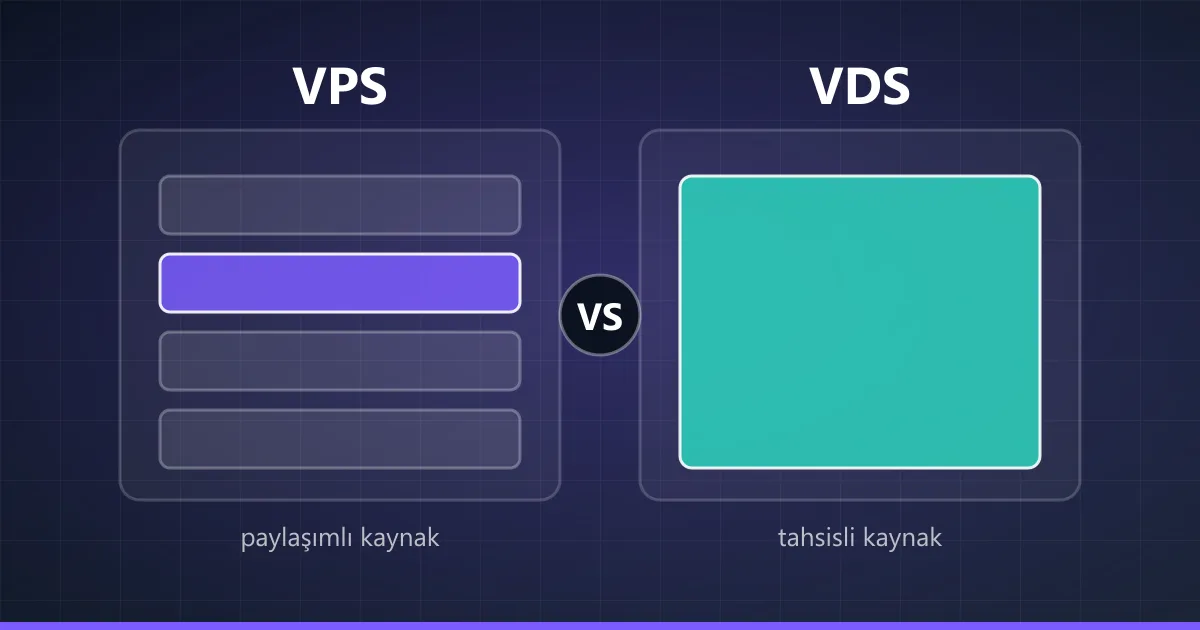
A VPS is created by splitting one physical server into several virtual machines using virtualization software. Resources such as CPU, RAM and disk are allocated on a shared basis.
VDS (Virtual Dedicated Server)
With a VDS, the physical server’s resources are carved out and dedicated to a single customer. Your allocation is guaranteed and is not affected by what anyone else on the host is doing.
Side by Side Comparison
| Feature | VPS | VDS |
|---|---|---|
| Resource allocation | Shared | Guaranteed / dedicated |
| Performance | Can fluctuate | Stable and predictable |
| Isolation | Software level | Hardware level |
| Impact of neighbours | “Noisy neighbour” problems possible | Unaffected by other tenants |
| Price | More affordable | Slightly higher |
| Root access | Yes | Yes |
| Scalability | Easy | Easy |
| Reliability | Good | Excellent |
The “Noisy Neighbour” Problem
The biggest risk on a VPS is the noisy neighbour effect. If another VPS sitting on the same physical host starts hammering the CPU or the disk, your own server slows down even though nothing changed on your side.
A VDS does not have this problem, because the resources are separated at the hardware level. Your CPU cores, your RAM and your disk space belong to you alone.
When Should You Choose a VDS?
Go with a VDS when:
- Game server hosting: FiveM, Minecraft and Rust all need consistent CPU performance
- E-commerce sites: a slowdown during a traffic peak costs real money
- Database servers: MySQL and PostgreSQL need steady I/O throughput
- Business critical applications: downtime and performance swings are not acceptable
When Is a VPS Good Enough?
A VPS is a sensible choice for:
- Low traffic websites
- Development and staging environments
- Personal projects
- Tight budget launches
The White Bilişim VDS Advantage
Every virtual server we sell runs on VDS technology, which means each customer gets guaranteed resources rather than a share of a busy host.
Xeon Enterprise VDS
| Plan | CPU | RAM | SSD | Price |
|---|---|---|---|---|
| ENT-1 | 2 Core Xeon Gold 6230R | 2 GB DDR4 | 30 GB | 160 TRY per month |
| ENT-3 | 4 Core Xeon Gold 6230R | 6 GB DDR4 | 60 GB | 320 TRY per month |
| ENT-5 | 8 Core Xeon Gold 6230R | 10 GB DDR4 | 100 GB | 480 TRY per month |
| ENT-8 | 20 Core Xeon Gold 6230R | 32 GB DDR4 | 320 GB | 1,280 TRY per month |
Ryzen Premium VDS
| Plan | CPU | RAM | SSD | Price |
|---|---|---|---|---|
| PRO-1 | 2 Core Threadripper PRO 5975WX | 4 GB DDR4 | 50 GB | 400 TRY per month |
| PRO-4 | 8 Core Threadripper PRO 5975WX | 10 GB DDR4 | 100 GB | 1,000 TRY per month |
| PRO-6 | 12 Core Threadripper PRO 5975WX | 16 GB DDR4 | 160 GB | 1,600 TRY per month |
| PRO-8 | 20 Core Threadripper PRO 5975WX | 32 GB DDR4 | 320 GB | 3,200 TRY per month |
Included with every plan:
- ✅ 10 Gbps network connectivity
- ✅ Istanbul / Datacasa location
- ✅ Free daily backups
- ✅ 24/7 technical support
- ✅ DDoS protection
Conclusion
The single most important difference between a VDS and a VPS is the resource guarantee. For critical workloads, game servers and anything that depends on predictable performance, a VDS is the safer call every time.
👉 Start affordably with Xeon Enterprise VDS, go all in on performance with Ryzen Premium VDS, or browse our use case pages for game servers and remote desktop.